

To celebrate its year-long 30th Founding Anniversary celebrations, the University of the Philippines Mindanao will be organizing the Asia-Pacific Frontiers Multi-Conferences 2025, which consists of three separate events co-organized with various institutions: the International Conference on Agricultural Economics and Development (ICAED2025); the Global Biodiversity Conservation Conference (GBCC2025); and the Pag-aboll: International Conference on Mindanao Studies.
Prof. May Anne E. Mata, PhD, UPMin director for research and Outstanding Young Scientist (OYS) awardee, stated: “For 30 years, UP Mindanao has been committed to providing an avenue for researchers from all over the country and around the world, particularly our neighbors in Asia and the Pacific, to come together and discuss various issues affecting our agri-food value chains, our natural environments, and our cultural landscapes.”
By hosting these events, UP Mindanao aims to make world-class research and scholarship available to many researchers in Mindanao who might not have the means to travel abroad to present their work at international conferences.
“Furthermore, holding conferences in Davao City is also part of our advocacy and strategy to bring international speakers and experts to Mindanao, given the challenges of hosting events here where many areas outside our region are considered orange and red zones subject to stricter travel advisories by various countries.”
The first of the events is the International Conference on Agricultural Economics and Development (ICAED2025), which will be held on 10-11 September 2025 at the Acacia Hotel Davao, aims to bring international scholars working in the field to talk about relevant topics such as the importance of generating home-grown innovations, such as biotechnology, AI, and robotics, to address the effects of climate shifts. Furthermore, changes in international trade policies such as the US-imposed tariffs and cutting funding for diversity, equity, and inclusion (DEI) initiatives in developing countries will have an adverse impact not only on global supply chains but also on local livelihoods and well-being, particularly of marginalized groups.
This conference is co-organized by the UPMin Office of Research, Agri-Aqua Value Chain Laboratory (AAVC Lab), and Curtin University (Australia), with funding from the Philippine Council for Agriculture, Aquatic and Natural Resources Research and Development (PCAARRD) of DOST.

The second event is the Global Biodiversity Conservation Conference (GBCC 2025), which will be held on 1-3 October 2025 (final venue to be determined) and aims to unite scientists, policymakers, conservationists, and stakeholders from around the world to address pressing biodiversity challenges that impact both terrestrial and marine ecosystems and explore innovative solutions that fuse traditional knowledge with state-of-the-art approaches.
This conference is organized by the Liberec Zoo (Czech Republic), the Philippine Eagle Foundation (PEF), the UPMin Office of Research, the Coral Reef Resiliency and Ecology Studies Laboratory (CRREST Lab), and the Wildlife-Human Interaction Studies, Ecological Research, and Biodiversity Conservation (WISER BioCon) Laboratory. The Czech Embassy in the Philippines, the Liberec Zoo, the Olomouc Zoo, and the Czech University of Life Sciences Prague are financially contributing to make this conference possible.
Lastly, the Pag-aboll: International Conference on Mindanao Studies (Pag-aboll 2025), which will be held on 20-22 November 2025 (final venue to be finalized), aims to interrogate the very notion of “Mindanao studies” and to develop insights based on long-term and durable patterns and dynamics focusing on local histories, heritage making, environments as both biogeographic and cultural zones, governance as network of state and community institutions, and broader geographic links beyond Mindanao (e.g., Mindanao in relation to the Visayas, Celebes Sea, BIMP-EAGA, ASEAN, and the global community). This conference is organized by the Mindanao Studies Center (MSC) and the Office of Research, with funding support from the University of the Philippines System.
“As we celebrate 30 years, we adopt the theme ‘Damlag,’ which is the Binisaya term for ‘future,’ which is quite fitting,” said Dr. Mata. “UP Mindanao as an academic and government institution cannot address all the gaps and challenges in Mindanao, but we extend our hand to other higher education institutions, other government institutions, private entities and non government institutions, and other stakeholders to help shape our collective future together. And that starts with talking to one another and freely sharing what we know.”
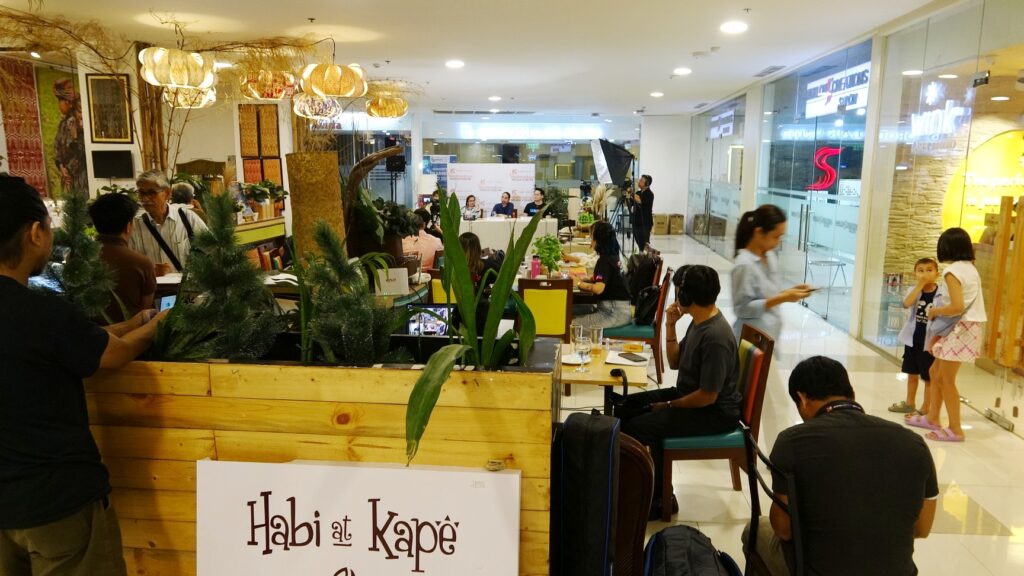
See the Wednesdays Media Forum Livestream [here].