
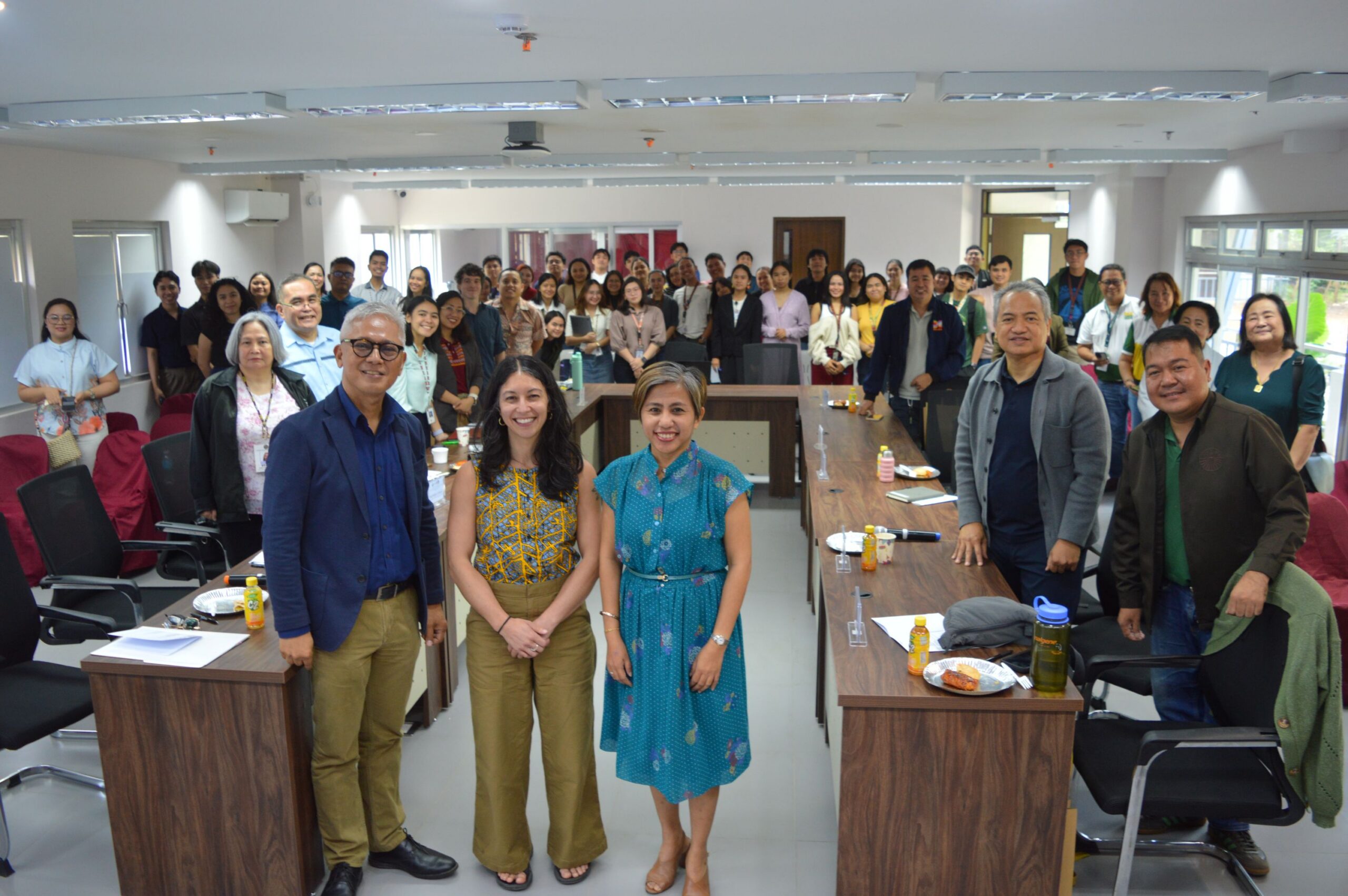

Dr. Caroline Hambloch of the University of Bonn disclosed inequalities she observed in her research on Philippine contract farming and, in return, local experts offered possible policy solutions, at the Visiting Experts Lecture Series, “Contract Farming in the Global South: A New Routledge Handbook and Lessons from the Philippines,” organized by the Agri Aqua Value Chain (AAVC) Laboratory and held in the UP Mindanao Center for the Advancement of Research in Mindanao (CARIM) Building on February 27, 2026.
AAVC Lab Founding Program Leader Prof. Larry Digal introduced Dr. Hambloch. “Based on her background and expertise, there’s a good match with our AAVC Lab’s interest, particularly in promoting or developing resilient, inclusive, and sustainable value chains,” he said.
Dr. Hambloch identified the relationship between the monopolistic buyer and the many farmer-sellers as the root cause of the uneven power dynamics favoring the buyer in contract farming arrangements, particularly in Palawan and the Davao Region. Lack of agency, agricultural issues, land reform, and climate change burden the farmers, who either take action or migrate for other work.
Asst. Prof. Shemiah Placencia facilitated the subsequent discussion, which had Dr. Roehlano M. Briones and Ms. Diana J. Lopez of the Phil. Institute for Development Studies (PIDS), Mr. Sylvester Sales of the Mindanao Development Authority (MinDA), and Atty. Glenn P. Pobre of the Department of Agrarian Reform (DAR), who offered possible interventions from their respective agencies.
Prof. Pedro Alviola IV synthesized and provided context within academic theories for the benefit of BS Agribusiness Economics and other students present. UP Mindanao Vice-Chancellor for Academic Affairs Maria Stella Salazar delivered the closing remarks, underscoring the value of the knowledge that was given.
UP Mindanao Chancellor Lyre Anni Murao thanked Dr. Hambloch for delivering the lecture. “Her presence here reflects the value of Bayanihan in scholarship. When we dissolve institutional and international silos to come together, we expand our perspectives and deepen our shared accountability to the global community,” she said.